

Lowpass filters might not be grand or flashy, but they immensely impact many ground-breaking...

Summary
- High-reliability RF applications require extreme mechanical precision to maintain consistent performance in harsh environments. To achieve this level of standard, you need a filter manufacturing partner with the engineering expertise and quality controls to translate your specifications into a dependable solution.
- With the RF filter market projected to grow at a CAGR of 11.94%, engineers have more low-pass filter manufacturers to choose from, but fewer manufacturers openly share their design processes, quality standards, and manufacturing approaches.
- Q Microwave's approach focuses on maintaining tight control over design, manufacturing, and testing to deliver reliable filter performance beyond standard specifications.
The RF filter market is growing at a CAGR of 11.94%, giving companies more filter manufacturers to choose from. But having more options does not always make the decision easier. You still need to find a reliable partner who can deliver filters that meet your exact requirements.
When your RF system requires performance beyond what standard components can provide, a custom lowpass filter gives you greater control over the final design. Instead of adapting your system around an off-the-shelf solution, you can specify key requirements such as cut-off frequency, passband performance, stopband attenuation, insertion loss, power handling, and mechanical constraints to meet your mission-critical application requirements.
Selecting the right manufacturing partner is important when your lowpass filter design requires tight electrical specifications, repeatable performance, and consistent quality throughout production. At Q Microwave, we work with experienced engineers to translate your design requirements into manufacturable lowpass filter solutions while maintaining control over key performance parameters.
If you’re evaluating Q Microwave as a potential manufacturing partner, you may want a closer look at how we approach lowpass filter production and quality control.
We’ll walk you through each stage of the process, from design review and fabrication to testing and final inspection, so you can better understand how we maintain performance requirements throughout the manufacturing process.
How Does Q Microwave Manufacture Custom Lowpass Filters?
Step 1. Developing the Initial Design
Before moving into filter design, you need to define how the component will function within your system. This includes identifying critical requirements such as frequency range, cut-off performance, signal characteristics, and operating conditions.
Since every RF application has different requirements, Q Microwave will work with you to evaluate factors and environmental conditions when defining your filter design. These considerations will help us determine the right design approach to ensure the filter meets your system’s technical requirements.
Once we fully understand your project’s unique requirements, we’ll determine the most appropriate filter material, such as ceramic, coaxial resonators, or surface-mount devices (SMDs), for your components.
Our team will generally assess the following factors:
- Insertion Loss. We meticulously design and test our filters to minimize signal loss within the passband. By using advanced simulation tools and precision manufacturing techniques, we ensure that our lowpass filters maintain signal integrity and efficiency.
- Cut-off Frequency. Our engineers set precise cut-off frequencies by carefully selecting and tuning filter components. We use state-of-the-art equipment to measure and make sure that the filters effectively attenuate unwanted high-frequency signals, ensuring clean and accurate signal processing.
- Power Handling. We evaluate the filter’s ability to handle the required power levels without degradation or failure, which is vital for reliable performance in demanding applications.
- Environmental Stress Testing. This includes thermal and stress testing to ensure filters can operate reliably without degradation or failure in demanding applications.
General lead time: 3 to 5 working days
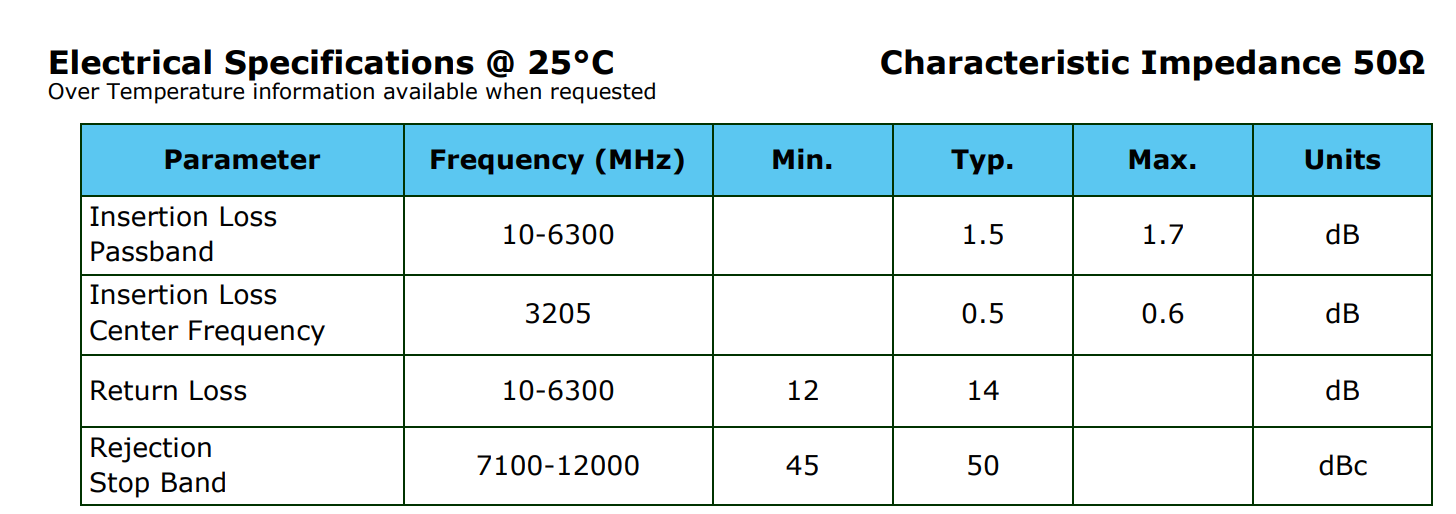
Sample Lowpass Filter Electrical Specifications
After designing the initial schematic of your lowpass filter, we’ll create an accurate simulation of the final product and provide you with an S2P file that describes the frequency response of the filter, so you can verify our evaluations and ensure that the proposed design meets both your short- and long-term project needs.
We will only proceed once you are fully satisfied with the results. Our team will closely collaborate with your RF engineers to ensure that the finalized schematic design aligns with your projected specifications.
From here, we can prepare an initial quote, set a feasible timeline, and calculate the additional testing requirements needed.
Step 2. Confirming the Preliminary Quote
For engineers, RF filter cost is a critical factor in determining the feasibility of any project. However, when manufacturers delay providing quotes, clients are put in a difficult position after investing significant resources in planning.
To provide greater clarity from the beginning, we present a comprehensive preliminary quote upfront. If you are satisfied with the initial design schematic of your lowpass filter and decide to proceed, we will break down the pricing and specifications for the entire project. This approach helps maintain transparency and allows you to make informed decisions without unnecessary delays.
Before moving into production, we provide detailed design concepts, mechanical outlines, and recommendations based on your project requirements. This way, you’ll have a clear understanding of the final design direction, expected specifications, and project scope before the manufacturing process begins.
Step 3. Lowpass Filter Manufacturing Process
After the preliminary quote is approved, we can begin manufacturing your custom lowpass filter. We’ll assign a dedicated point person who will work closely with you throughout the project to address any concerns that may arise.
Pro Tip: Unsure how to evaluate a potential lowpass filter manufacturer’s ability to meet your project timeline? During the initial discovery process, pay attention to how the manufacturer reviews your requirements, identifies potential design challenges, and explains the path from specifications to production. This can reveal whether their team has the capability and accountability needed to support your project.
During the manufacturing process, Q Microwave’s engineers will review your finalized design requirements and guide you through the following stages:
Design Review and Documentation
We’ll review the electrical and mechanical requirements for your filter, outline the manufacturing process, and provide a breakdown of the associated costs.
Material Planning and Procurement
Once the filter design requirements are defined, we select the appropriate materials and packaging configuration for production. Q Microwave supports multiple packaging options, including surface mount, connectorized, microstrip, and custom options to accommodate different application requirements.
Our lead times depend on material availability and the complexity of the required configuration. If your project requires specialized components from external vendors, we will manage the procurement timeline and keep you informed throughout the process to help maintain your project schedule.
Assembly Preparation
While waiting for materials, we’ll prepare the required documentation for assembly and testing to help prevent delays.
Assembly and Testing
Once materials arrive, we’ll compile them into an assembly kit. Our assembly team will then follow the lowpass filter schematic documentation for construction, testing, and cleaning.
Fine-Tuning Lowpass Filters for Specialized Design Schematics and Compliance
Once we complete the initial build, we will fine-tune your lowpass filter to evaluate key RF performance parameters. We will then perform additional environmental tests, such as thermal, shock, and altitude testing, as needed for your application.
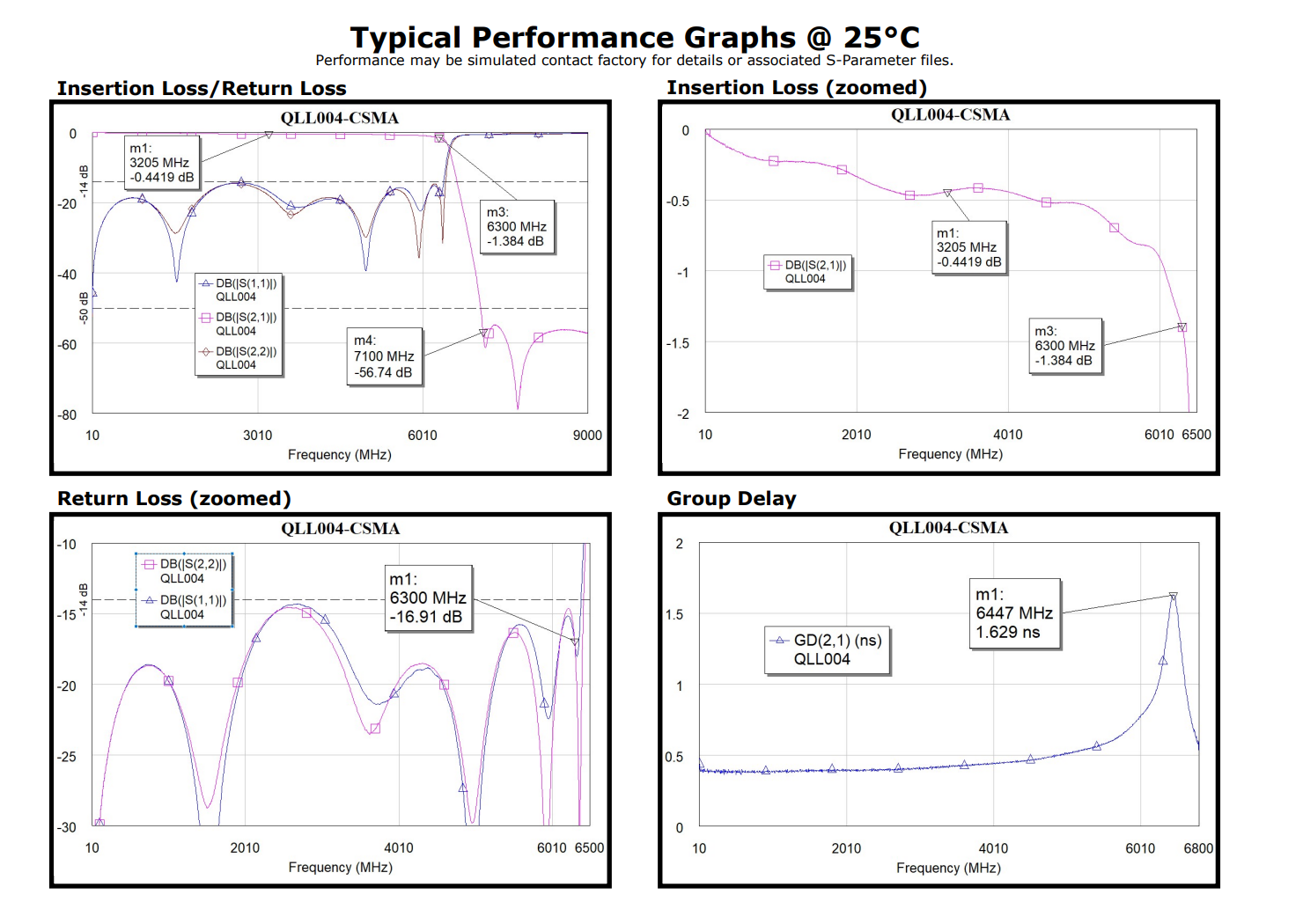
Sample Lowpass Filter Performance Graphs
Our team will only move forward once we achieve the precise specifications outlined in your schematics.
After completing the evaluation, we will mark and label your filters for the final round of mil-spec compliance testing. During this stage, your lowpass filters undergo final compliance testing to make sure that they meet relevant industry standards and certifications, including AS9100 for quality management systems, IPC A-610, and J-STD-001.
Step 4. Handling Post-Delivery
Once we ship your final lowpass filter, we’ll send the final invoice.
The final bill may include non-recurring engineering (NRE) charges, which cover the work involved in creating a new product, including documentation, design, research, conceptualization, and development.
NRE costs only apply during the initial phase of a project. For repeat orders or mass production of the same lowpass filters, we use the existing schematics to avoid additional NRE charges.
Throughout the process, your dedicated point person will keep you updated on any costs from the beginning. This way, you’ll have a clear understanding of the project scope and won’t encounter unexpected changes from the initial quote.
Post-Delivery Check-Ins and Satisfaction Ratings
At Q Microwave, client feedback is invaluable. We encourage clients to provide feedback and ratings based on delivery time and product quality. This input helps us continuously refine and improve our processes and lead times.
Our company takes feedback seriously. We strive to exceed our clients’ expectations and foster long-term partnerships by delivering high-quality lowpass filters consistently. Your satisfaction drives our commitment to excellence in every project we undertake.
Q Microwave: Precision and Quality in Lowpass Filters
Quality is paramount when securing lowpass filters for specialized projects, yet suppliers rarely disclose their manufacturing processes. This lack of transparency leaves RF engineers uncertain about the quality controls in place.
At Q Microwave, we aim to provide clarity by offering an inside look into our fast yet meticulous and rigorous manufacturing process.
Our team delivers the highest-quality lowpass filters tailored to your exact design specifications with competitive lead times. Through continuous innovation and stringent quality control, filters are tested to maintain long-term performance in various environmental conditions.
Share your project details with Q Microwave and learn about our RF filter offerings today.
Lowpass Filter Manufacturing FAQs
Q: What standards should a lowpass filter manufacturer meet for military and aerospace applications?
A: For military and aerospace RF applications, manufacturers commonly follow standards such as AS9100 for aerospace quality management systems and ISO 9001 for quality management. Depending on the program requirements, customers may also require compliance with standards related to documentation, traceability, inspection, and testing.
Beyond certifications, look for a manufacturer with experience supporting high-reliability programs and the ability to verify performance through documented testing processes.
Q: How much does a custom lowpass filter cost?
A: The cost of a custom lowpass filter depends on factors such as frequency range, electrical specifications, packaging requirements, materials, testing requirements, and production volume. Since every RF design has different requirements, the best way to determine cost is to discuss your specifications with a manufacturer. Q Microwave can review your requirements and provide a quote with no obligation to move forward, so you can better understand your options before making a decision.
Q: How long does it take to manufacture a custom lowpass filter?
A: Lead times depend on factors such as design complexity, material availability, packaging requirements, and testing needs. A manufacturer with established vendor relationships and clear communication processes can help identify potential delays early and provide realistic timelines.
Q: What are the best manufacturers for lowpass filters in the US?
A: The best lowpass filter manufacturer is not simply the one that meets your specifications. A strong filter manufacturing partner understands your application requirements, asks the right questions, communicates potential challenges early, and has the manufacturing controls needed to deliver consistent performance.